
Testing Services
Electronic Leak Detection
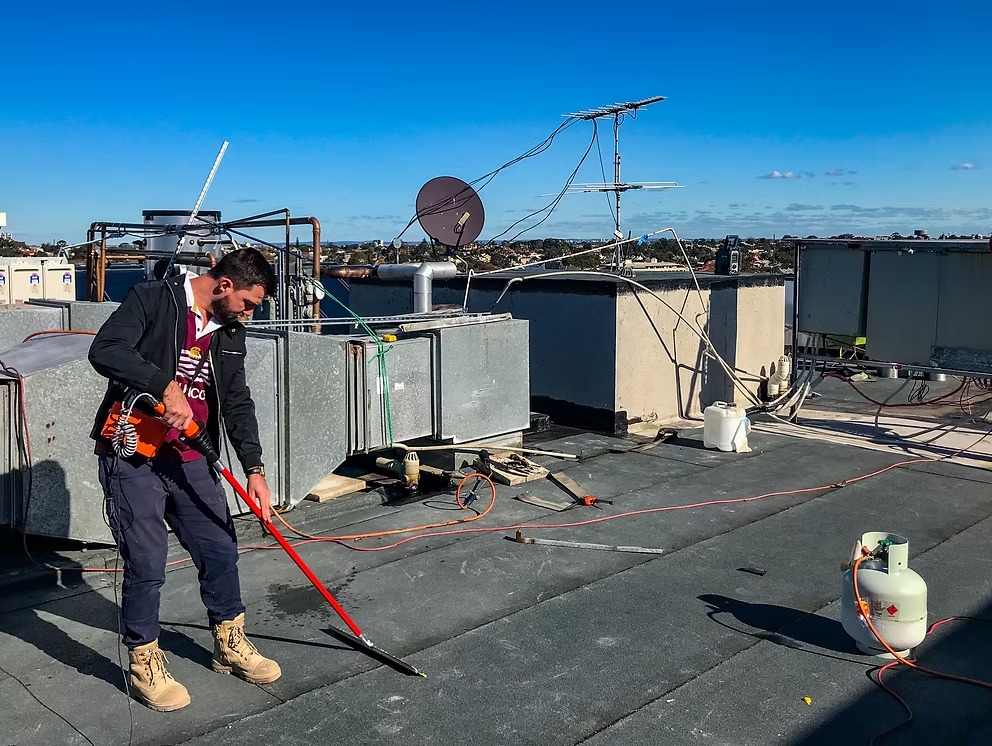
NATA-accredited, non-destructive testing that can determine membrane breaches invisible to the naked eye — either before they become costly water ingress problems or to assist in locating the issue.
NATA Accredited • Non-Destructive
ELD Methods
Fit-for-purpose testing methodologies tailored to your project conditions.
Electronic Leak Detection
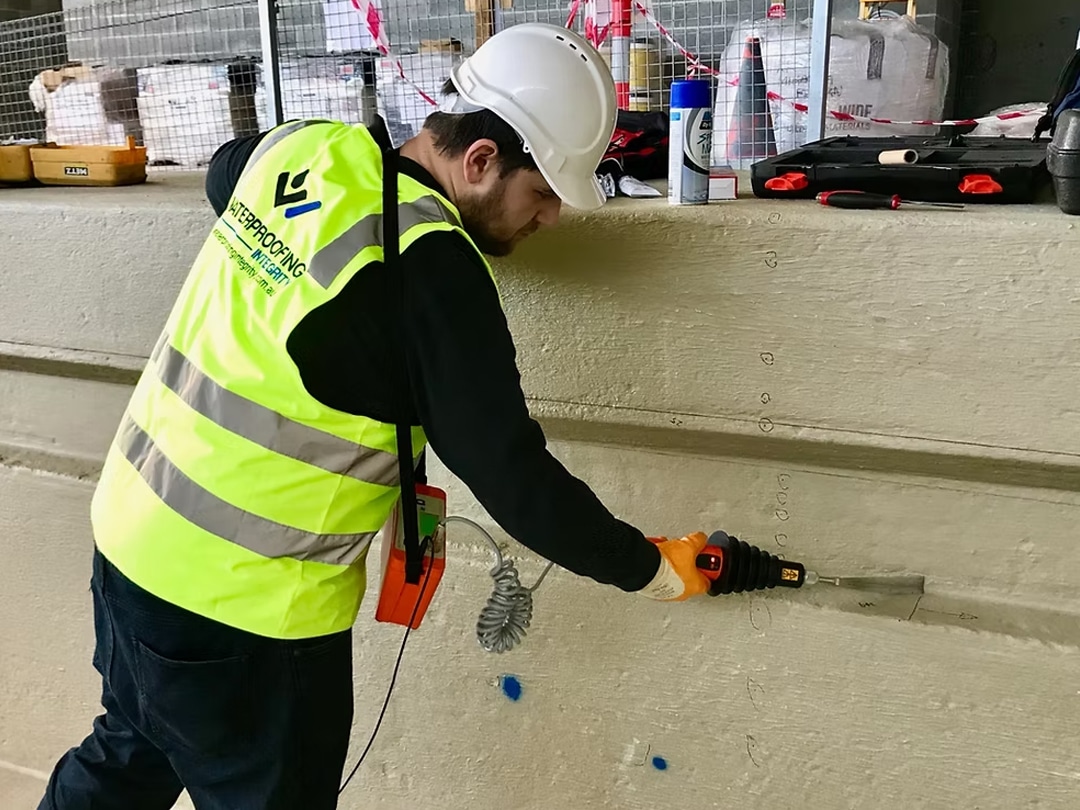
Electronic Leak Detection (ELD) is a type of continuity testing, comparable to a flood test in performance. ELD creates an electric circuit through a non-conductive membrane to find coating film discontinuities that are not readily visible.
Waterproofing Integrity utilise a number of types of electronic leak detection with a view to being fit for purpose and benefits that each offers. an area.
- Detects even the smallest pinholes or punctures invisible to the eye
- Provides instant, exact defect location for efficient repairs
- Avoids long and disruptive flood testing
- Complies with ASTM D7877 and relevant manufacturer warranty guidelines
Electromagnetic Scanning Leak Detection
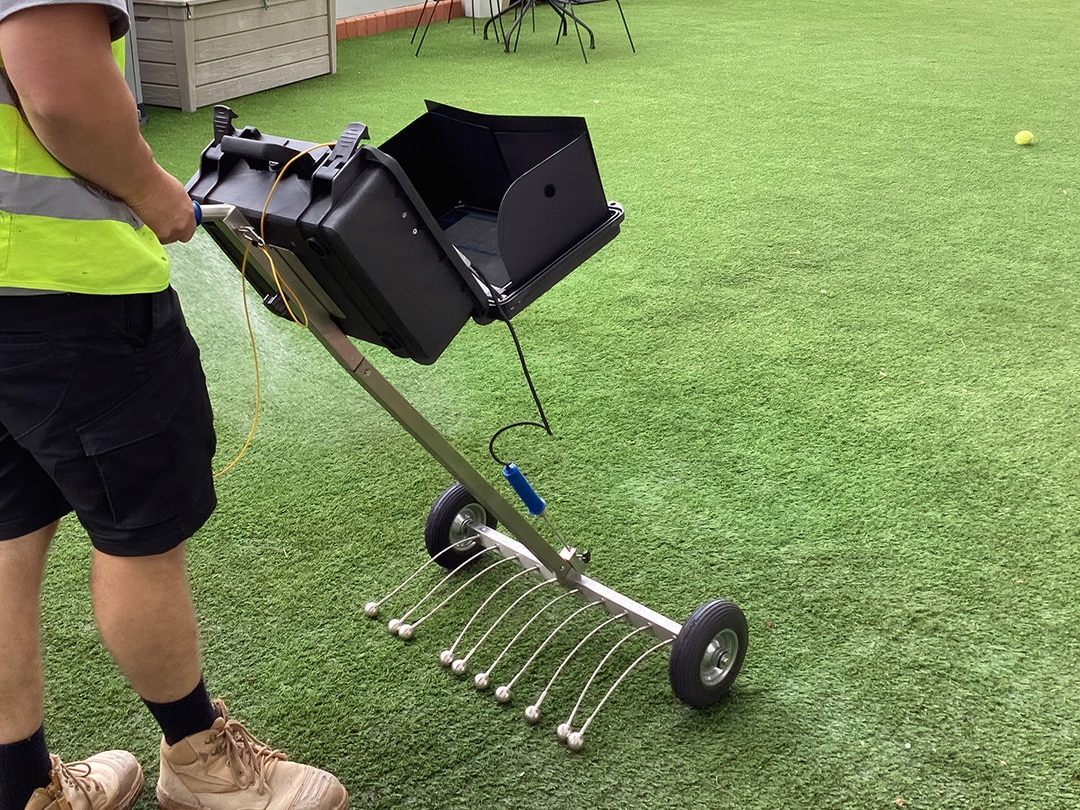
Large roofs and podiums often hide moisture pathways that conventional testing can’t detect. Electromagnetic scanning generates a dynamic electrical field that maps moisture variations across an entire area, revealing leak paths, saturated substrates, and weak spots with high accuracy. Performed in line with ASTM D7877 principles, it provides a high-resolution overview ideal for complex or multi-layered waterproofing systems.
Leaks can occur, whether that be shortly after works have been completed or years after construction works. This non-destructive investigative scanning technology facilitates the identification of likely leak points in waterproofing membranes or structural elements that can visibly not be seen.
- Detects active leaks and moisture movement with high resolution
- Maps large areas quickly, including complex roof or podium layouts
- Non-destructive and safe for all waterproofing systems
- Produces quantifiable results in line with ASTM D7877 standards
- Suitable for both performance verification and ongoing maintenance
Wet ELD & Vector Mapping
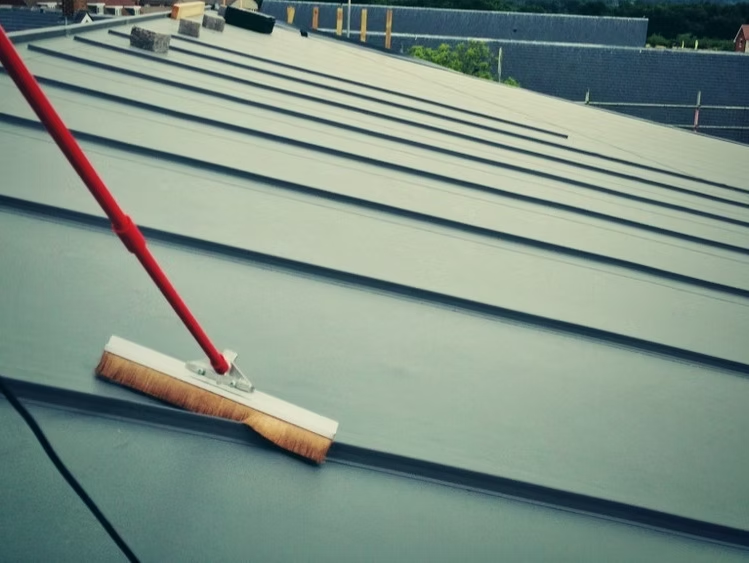
Waterproofing Integrity possess other electronic leak detection methodologies which are achieved with a low voltage DC current through wet applications. Vector Mapping, sponge and other methods are able to detect breaches in waterproofing membrane applications. Vector mapping can also be used over tiles on balconies, podiums or rooftops.
Low voltage DC current
Works through tiled surfaces
Vector mapping for precise location
Suitable for balconies, podiums & rooftops

How It Works
01
Surface Preparation
Membrane surface is cleaned and prepared for testing
02
Equipment Setup
Testing equipment is calibrated and electrodes positioned
03
Systematic Scan
Entire membrane area is methodically scanned for discontinuities
04
Report & Rectify
Breach locations are marked, documented and rectification verified
ISO 17020
NATA Accredited
Zero damage
Non-Destructive
Pinpoint accuracy
Detection
When to Use ELD
-
New Construction
Quality assurance testing on freshly applied membranes before tiling or backfilling.
-
Existing Buildings
Diagnostic investigation to locate breaches causing water ingress without destructive methods.
-
Maintenance Programs
Scheduled integrity checks to maintain warranty compliance and building performance.
-
Over Tiled Surfaces
Vector mapping can detect breaches through tiles on balconies, podiums and rooftops.
Request Electronic Leak Detection Services
Tell us about your project. We’ll have the right specialist in touch shortly.
Common Questions
What kinds of buildings need Electronic leak detection?
Any building that uses a membrane within its construction will benefit from this kind of testing.
Do you offer ELD services nationally?
Yes. We can have our technicians travel to even the most remote areas around Australia.
What does an initial consultation involve?
We will discuss your project, understand the scope, and recommend the right service, whether that is a design review, inspection program, testing, or defect assessment. There is no cost or obligation for the initial conversation.
What size projects do you work on?
Everything from single-dwelling remediation to multi-tower developments. Our client base includes tier-1 builders, major developers, and individual asset owners.
What accreditations do you hold?
We are NATA accredited for waterproofing testing and members of the Australian Institute of Waterproofing (AIW). Our team includes qualified building inspectors and registered engineers.
How are your fees structured?
Fees depend on scope, complexity, and service type. We provide a clear proposal with fixed pricing before any work begins. No hidden costs.
Can I send you plans or documents before our call?
Absolutely. After submitting the form, you will receive a confirmation email with instructions for sharing project documentation securely.